Introduction: The Fast-Changing World of Medical CNC machining
Medical CNC machining is not a static technology. Driven by demand for smaller implants, faster production, smarter factories, and patient-specific care, the industry is evolving rapidly. If you source medical CNC parts or run a machine shop serving the medical industry, understanding these trends is not optional — it determines your competitive position in 2026 and beyond.
This guide covers the six most important trends shaping medical CNC machining today: 5-axis automation, micro-machining, digital twins and data, new materials, smart factories, and patient-specific manufacturing. For the current state of the art, see our medical CNC machining guide.
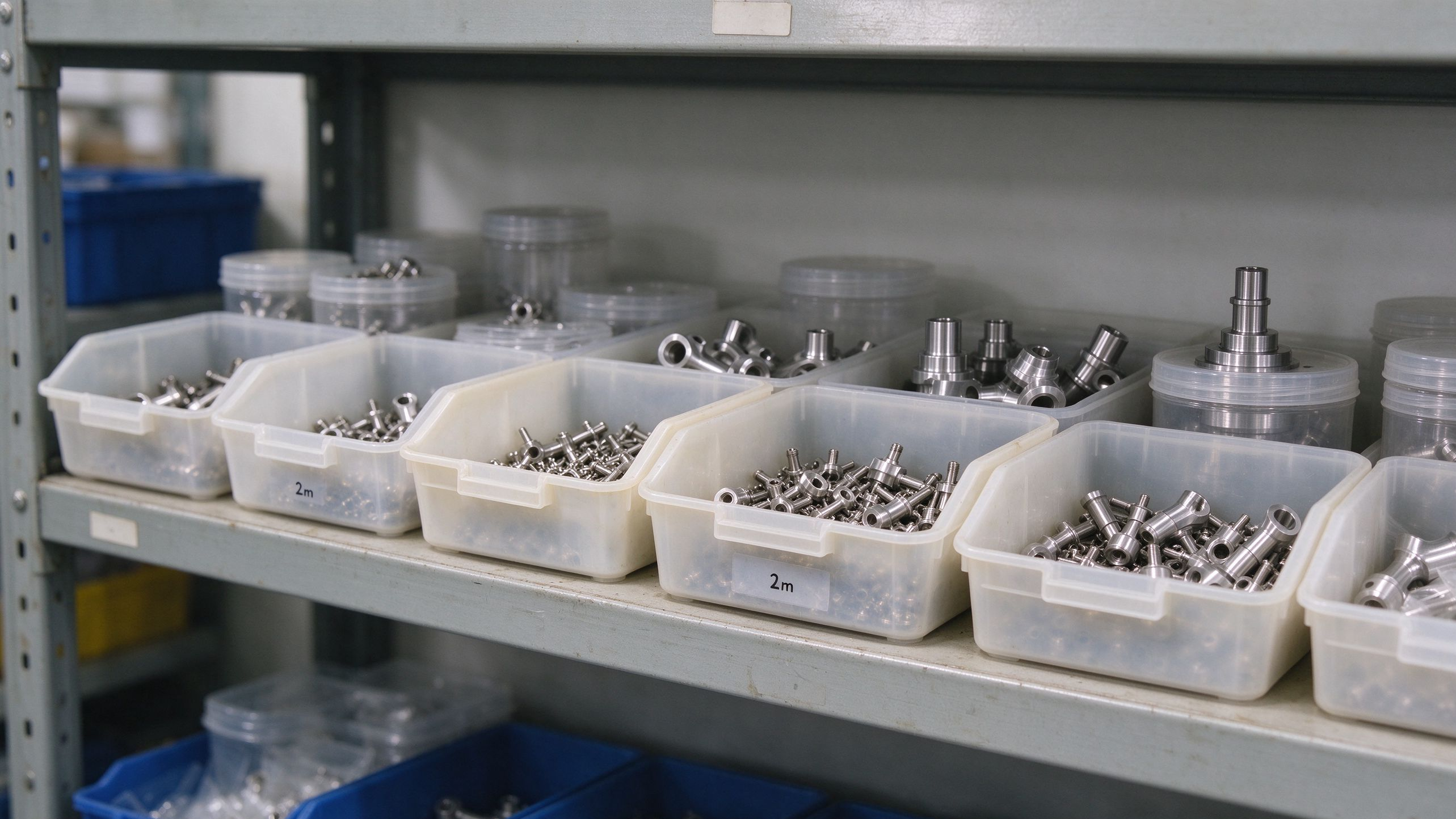
Trend 1: Five-Axis Machining Goes Mainstream for Implants
For years, 3-axis machining was the medical standard. In 2026, 5-axis machining is becoming the default for complex medical parts.
Why 5-axis adoption is accelerating:
Single-setup production: Complex geometries (hip stems, cranial implants, spinal cages) that previously required 3–5 setups can now be machined in one fixture
Better accuracy: Each setup introduces tolerance stack-up; one setup = tighter overall tolerance
Better surface finish: Continuous 5-axis motion enables smoother tool paths on contoured surfaces
Smaller part footprints: Shops can machine more parts per setup, reducing cost
Medical applications driving demand:
Patient-specific cranial and maxillofacial implants
Complex orthopedic articulating surfaces
Dental implant abutments (already heavily 5-axis)
Minimally invasive surgical instruments
Implication for buyers: If your supplier still machines complex implants on 3-axis equipment, they are likely slower, less accurate, and more expensive than 5-axis competitors. See our precision medical machining guide.
Trend 2: Micro-Machining for Minimally Invasive Surgery
Minimally invasive surgery (MIS) demands smaller, more precise instruments and implants — and CNC micro-machining is growing fast as a result.
What is medical micro-machining?
Features smaller than 1mm
Swiss-type (sliding headstock) lathes with 10+ tools
Micro-milling with sub-1mm end mills
Micro-drilling and micro-tapping
Applications driving micro-machining:
Neurovascular stents and catheters
Micro-surgical instruments (ophthalmic, neurosurgical)
Hearing aid components
Dental micro-components
Implantable device connectors (pacemakers, neurostimulators)
Technical challenges:
Tool chatter at sub-millimeter scales
Chip evacuation (micro-chips)
Thermal management (tiny tools overheat quickly)
Inspection (microscope or SEM required)
Why it matters: The trend toward smaller incisions and implantable devices means more parts at micron scale. Suppliers with Swiss-type and micro-milling capabilities will capture this growth.
Trend 3: Digital Twins and Data-Driven Manufacturing
Medical CNC machining is becoming digital-first. The digital twin — a virtual replica of the machining process — is changing how parts are programmed, inspected, and validated.
What digital twin integration looks like:
CAD model → CAM simulation → digital twin of the machining process
Tool paths simulated before cutting (collision detection, cycle time prediction)
Real-time sensor data (vibration, temperature, tool wear) compared against the twin
Predictive maintenance before failures
Automatic inspection data feeds back into the model
Benefits for medical manufacturers:
Faster first-article approval (simulated = fewer surprises)
Reduced setup time (simulated offsets)
Predictive quality (detect drift before it causes defects)
Easier regulatory documentation (data automatically captured)
Adoption reality: Digital twin capabilities are currently led by premium machine brands (DMG Mori, Makino, Mazak). Early adopters in Medical Device Manufacturing report 20–40% reduction in setup time and first-article scrap.
What to ask your supplier:
"Do you use CAM simulation before machining?"
"How do you monitor tool wear and process stability?"
"Do you capture CMM data digitally for SPC?"
Trend 4: New Materials and Additive-Subtractive Hybrids
Material innovation continues to open new possibilities in medical CNC machining.
Emerging materials in 2026:
PEEK composites (CFR-PEEK, nano-hydroxyapatite PEEK) — stronger, more bone-like, for spinal and orthopedic applications
TiZr alloys (Roxolid-type) — higher strength for small-diameter dental implants
Magnesium alloys (bioresorbable) — temporary implants that dissolve in the body
Nanostructured titanium — improved osseointegration surfaces
Glassy carbon and silicon nitride ceramics — new orthopedic and dental applications
Additive-subtractive hybrid manufacturing:
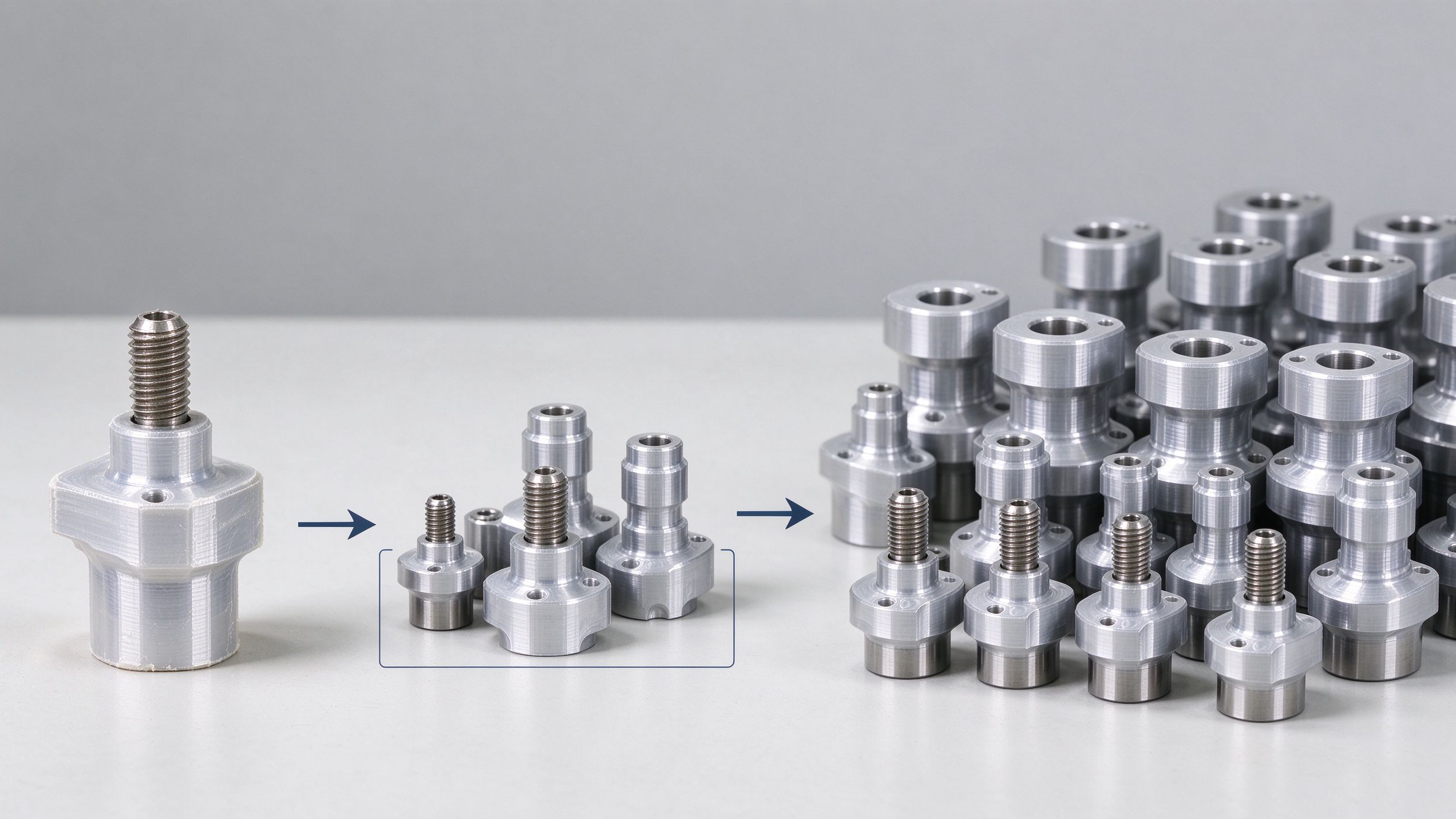
The most important trend is not choosing between 3D printing and CNC — it is combining them:
3D print a near-net-shape titanium lattice (porous bone-ingrowth structure)
CNC finish the precision mating surfaces, bearing surfaces, and screw threads
Result: a part that could not be made by either method alone
This hybrid approach is already standard for premium orthopedic implants and will spread to dental and trauma applications.
Implications: Suppliers who can offer both additive and subtractive capabilities — or strong partnerships with both — will win the next decade.
Trend 5: Smart Factories and Lights-Out Automation
Medical machining is increasingly automated — and not just for high-volume consumer parts. Medical device companies are investing in CNC automation to address cost pressure, labor shortages, and consistency demands.
What lights-out automation looks like in medical:
Robot-loaded CNC cells (6-axis robots loading/unloading parts)
Automated tool changers and in-process measurement probes
Barcode/RFID part tracking (supports traceability automatically)
Unmanned night/weekend shifts ("lights-out" production)
Automated inspection cells (CMM robots, vision systems)
Benefits:
24/7 production (better machine utilization)
Consistent quality (no human variability)
Lower per-part cost
Automatic data capture (traceability, SPC)
Why medical is adopting it now:
Labor costs and shortages
Demand for more consistent quality
Regulatory pressure for documented processes
Competition from low-cost geographies
Reality check: Lights-out is still mainly for high-volume or standardized medical parts. Custom and prototype work still needs skilled machinists. But even custom shops are adding automation for loading/unloading and inspection.
Trend 6: Patient-Specific and Personalized Medical Manufacturing
The biggest long-term trend is personalization. From one-off cranial implants to custom dental abutments, medicine is moving toward patient-specific care — and CNC machining is the enabling technology.
What patient-specific CNC machining looks like:
Patient CT/MRI scan → segmentation
3D model tailored to the patient's anatomy
CNC program generated automatically (or semi-automatically)
Part machined, inspected, delivered in 1–3 weeks
Part is one-of-a-kind, documented for that specific patient
Applications already growing:
Custom cranial implants (cranioplasty)
Patient-specific hip and knee implants
Custom dental abutments and frameworks
Patient-specific surgical guides (already mainstream)
Custom prosthetic sockets and orthotics
Enabling technologies:
Automated CAD/CAM software for patient parts
5-axis machines for complex one-off geometries
3D scanning and medical imaging integration
Digital thread from scan to delivery
Challenges:
Each part is effectively a prototype — cost is high
Regulatory framework for one-off devices is still evolving
Quality control must work for unique parts (can't rely on SPC across batches)
Implication: The future medical CNC shop will not just make standardized parts — it will make one-of-a-kind parts efficiently. Those that invest in automation, digital workflows, and patient-specific software will lead.
For the current state of patient-specific dental parts, see our Dental CNC Machining guide.
Q1: Will CNC machining be replaced by 3D printing in medical devices?
A: No — they are complementary. 3D printing excels at complex lattices and patient-specific shapes; CNC excels at precision, surface finish, material strength, and cost at volume. The future is hybrid (both), not either/or.
Q2: Is 5-axis machining necessary for all medical parts?
A: No — simple prismatic parts and device housings can be 3-axis. But complex implants, patient-specific parts, and high-precision components increasingly need 5-axis for accuracy and cost.
Q3: How fast is patient-specific medical manufacturing growing?
A: The patient-specific implant market is growing 10–15% annually — faster than standard implants. Key drivers are digital imaging, automation, and surgeon demand for better fit.
Q4: Will automation reduce the need for skilled CNC machinists?
A: Automation handles loading/unloading and inspection, but skilled machinists remain essential for programming, setup, DFM, and problem-solving. The role shifts from manual operation to process oversight.
Q5: What should a medical CNC supplier invest in for the future?
A: 5-axis capability, micro-machining (Swiss-type), digital data infrastructure, automation cells, and partnerships with 3D printing providers for hybrid manufacturing.
Conclusion: Positioning for the Future of Medical CNC
The medical CNC machining industry is being reshaped by 5-axis automation, micro-machining, digital integration, new materials, and patient-specific manufacturing. Suppliers that invest in these trends — and buyers that choose suppliers who have — will win the next decade.
At Konsdun, we're investing in 5-axis machining, micro-machining capabilities, digital quality data, and hybrid manufacturing partnerships — so your parts are built on future-proof technology, not yesterday's equipment.






 Phone
Comment
(0)