Product Introduction
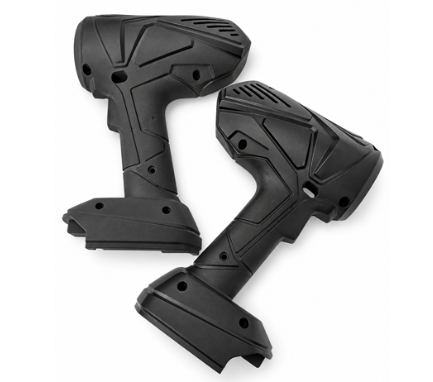
This product is a power tool outer housing developed for handheld electric equipment. Its overall shape follows the familiar pistol-grip form used in cordless drills and similar tools, combining the main body and handle area into one continuous casing structure.
From the visible design, the housing includes the main enclosure area, grip section, lower battery connection region, and multiple fastening positions for assembly. Openings and screw locations are arranged to support the internal installation of functional components such as the motor, trigger switch, internal frame parts, and other electrical or mechanical elements.
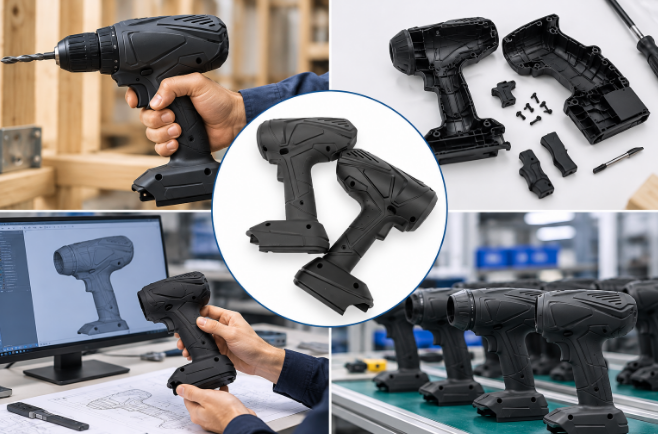
For early-stage product development, a 3D printed version is useful for design confirmation, ergonomic checking, and assembly review. Once the structure is finalized, the project can move toward injection molding for larger-volume production. This makes the housing suitable not only for prototype evaluation, but also for bridging the development process between concept verification and production preparation.
KONSTUN Precision Technology supports plastic housing development for handheld tools, including prototype making, structural sample production, and related manufacturing solutions based on customer designs.
Key Specifications & Parameters
Product Type: Power Tool Housing / electric drill handle casing
Manufacturing Option for Prototype: SLS 3D Printing or Similar Prototype Process
Mass Production Direction: Injection Molding After Design Confirmation
Prototype Material Options: PA12 Nylon or Comparable Engineering Plastic
Production Material Options: PA66, Glass-Fiber Reinforced Nylon, or Other Required Engineering Plastics
Main Structure: Integrated Main Housing with Pistol-Grip Handle
Visible Design Features: Assembly Screw Positions, Internal Cavity Space, Handle Grip Form, and Battery Connection Area
Typical Development Use: Appearance Samples, Structural Samples, Assembly Verification, and Pre-Production Evaluation
Optional surface finish: Natural Prototype Surface, Sanding, Texture Adjustment, or Other Requested Treatments
Main Functions
Outer Protection for Internal Components
The housing forms the main outer shell of the tool and is intended to enclose internal functional parts. It helps organize the external shape while reserving space for motor-related and control-related assembly.
Handheld Grip Structure
The handle portion is shaped for handheld use, making it suitable for ergonomic review during the prototype stage. Grip angle, contour, and proportion can be assessed before final tooling.
Support for Internal Assembly Layout
The casing provides reference positions for screws, openings, and cavity sections, which helps engineers evaluate how switches, internal supports, and other parts may fit within the enclosure.
Prototype Verification Before Tooling
A 3D printed housing allows product teams to confirm shape, appearance, and assembly logic before moving into more costly production tooling.
Transition from Sample to Production
This type of housing is suitable for a staged development path. A prototype can be produced first for testing and visual confirmation, then the final structure can be prepared for injection molding.
Suitable for Tool Product Development
The structure is appropriate for product development projects involving cordless drills, compact electric tools, and similar handheld equipment that require a dedicated plastic outer shell.
Specific Application Scenarios
Cordless Drill Housing Development
The product can be used as an early prototype housing for cordless drill projects, helping confirm the main body layout and handle structure.
Handheld Power Tool Appearance Samples
Design teams can use prototype housings to review product styling, surface form, and external proportions before final production decisions.
Assembly Testing for Tool Components
The casing can support internal fit checks for switches, internal brackets, motor-related parts, and other structural elements during the development process.
Pre-Production Engineering Review
Before tooling is opened for mass production, the prototype housing can be used in internal reviews to reduce changes at a later stage.
Small-Batch Evaluation Samples
For client review, market testing, or engineering comparison, small batches of prototype housings can be produced without waiting for molds.
Maintenance or Replacement Structure Studies
This type of part can also be referenced in projects involving replacement housings, accessory shells, or revised versions of existing handheld electric tools.
FAQ
Q1: Is this housing intended for 3D printing or injection molding?
A1: It can be used for both stages. A 3D printed version is suitable for prototype verification, while injection molding is more suitable once the design is finalized for production.
Q2: What kind of products can use this housing structure?
A2: It is suitable for handheld electric tools such as cordless drills, compact power tools, and similar equipment with a pistol-grip body design.
Q3: What material is suitable for the prototype version?
A3: Prototype samples are commonly made from engineering plastics such as PA12 nylon or similar materials, depending on the testing purpose and manufacturing process.
Q4: Can the internal structure be adjusted?
A4: Yes. Screw bosses, internal cavities, mounting points, openings, and wall thickness can all be adjusted according to the design and assembly requirements.
Q5: Can this housing be used for appearance review only?
A5: Yes. It can be used for appearance confirmation, ergonomic checking, and structural assessment before the final production method is selected.
Q6: What files are recommended for developing a similar housing?
A6: A 3D model, 2D drawings if available, assembly reference information, and intended application details are helpful for evaluating prototype making and later production options.






 Phone