Medical CNC machining is the backbone of modern Medical Device Manufacturing. From surgical instruments to orthopedic implants, precision-machined components form the foundation of healthcare technology. Unlike general industrial machining, medical-grade CNC processing demands micron-level accuracy, biocompatible materials, and full traceability to meet FDA and ISO 13485 requirements.
This guide covers everything you need to know about medical CNC machining in 2026 — from the basic workflow to material selection, precision standards, and how to find the right manufacturing partner. If you're an engineer, procurement manager, or medical device startup founder, this article will give you a clear roadmap.
What Is Medical CNC Machining? Definition and Basics
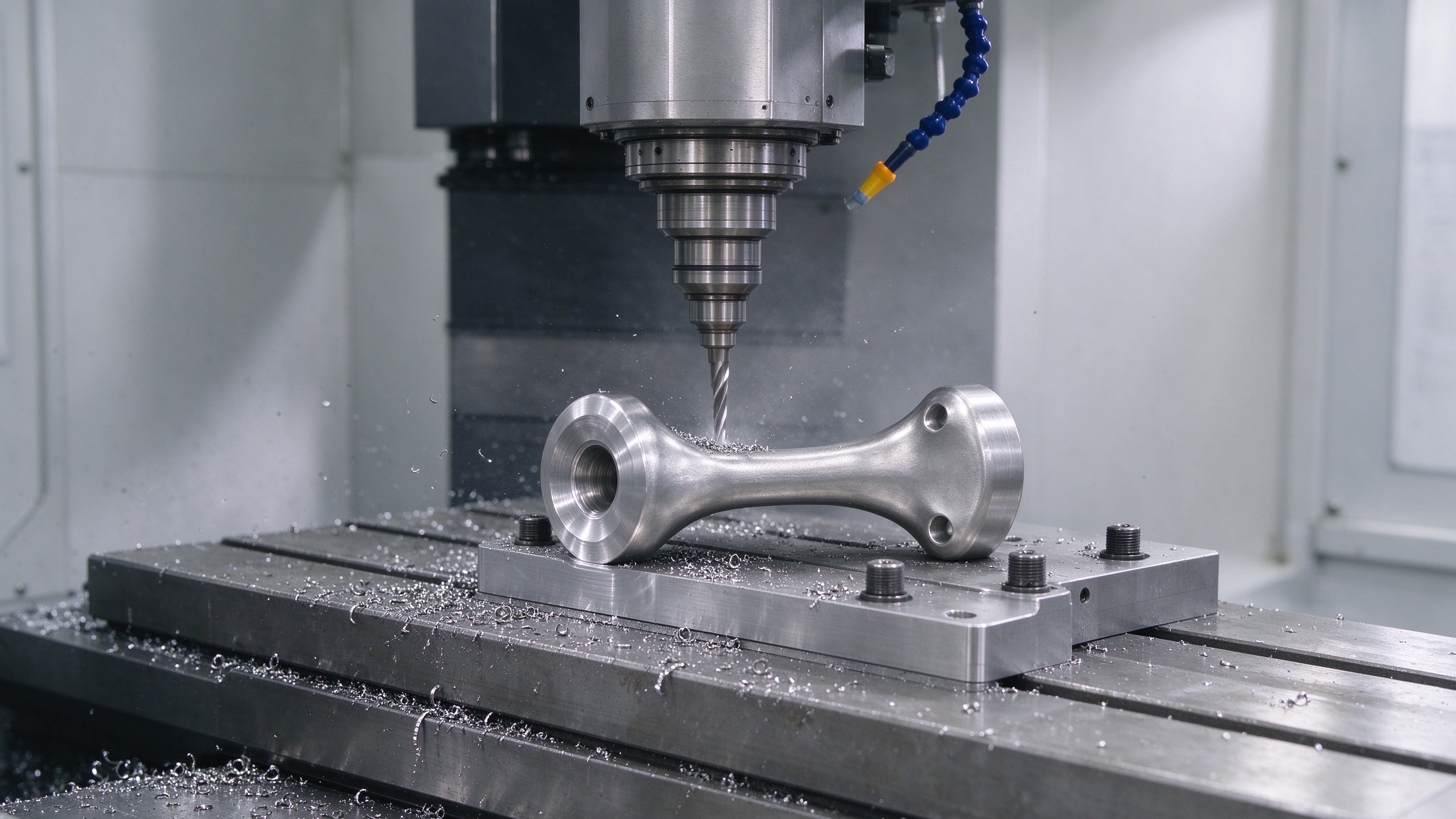
Medical CNC machining refers to the use of computer numerical control (CNC) machines to manufacture medical devices and components from medical-grade materials. The process removes material from a solid block (subtractive manufacturing) using rotating cutting tools, following a digital 3D model.
What makes medical CNC machining different from regular CNC? Three key differences:
Material certification: Every batch must come with material test reports (MTR) proving biocompatibility
Cleanroom environment: Many medical parts are machined in controlled or cleanroom environments
Full traceability: Every step from raw material to final packaging is documented for regulatory audits
Unlike 3D printing, which is excellent for rapid prototyping but limited in material options, medical CNC machining works with virtually any medical-grade material — titanium, stainless steel, PEEK, aluminum, and more.
Complete Medical CNC Machining Workflow for Medical Devices
A typical medical CNC machining workflow follows these 8 steps:
Step 1: CAD Design and DFM Review
The process starts with a 3D CAD model. A DFM (Design for Manufacturing) review checks for machinability — sharp corners, wall thickness, depth-to-diameter ratios, and surface finish requirements.
Step 2: Material Selection and Certification
Based on the application, engineers select the right medical-grade material (see our section below). Each raw material batch is verified with mill certificates.
CAM software generates toolpaths. Medical parts often require 3-axis, 4-axis, or 5-axis machining depending on complexity.
Step 4: Roughing and Finishing Operations
Roughing removes bulk material quickly, then finishing passes achieve the tight tolerances required for medical applications.
Step 5: Deburring and Edge Breaking
Medical parts require burr-free edges to prevent tissue damage during surgery. This is often done manually or with vibratory finishing.
Step 6: Surface Treatment
Anodizing, passivation, electropolishing, or other surface treatments are applied depending on the part's function.
Step 7: Cleaning and Sterilization Preparation
Parts go through ultrasonic cleaning, passivation (for stainless steel), and are packaged in sterile-ready packaging.
Step 8: Quality Inspection and Documentation
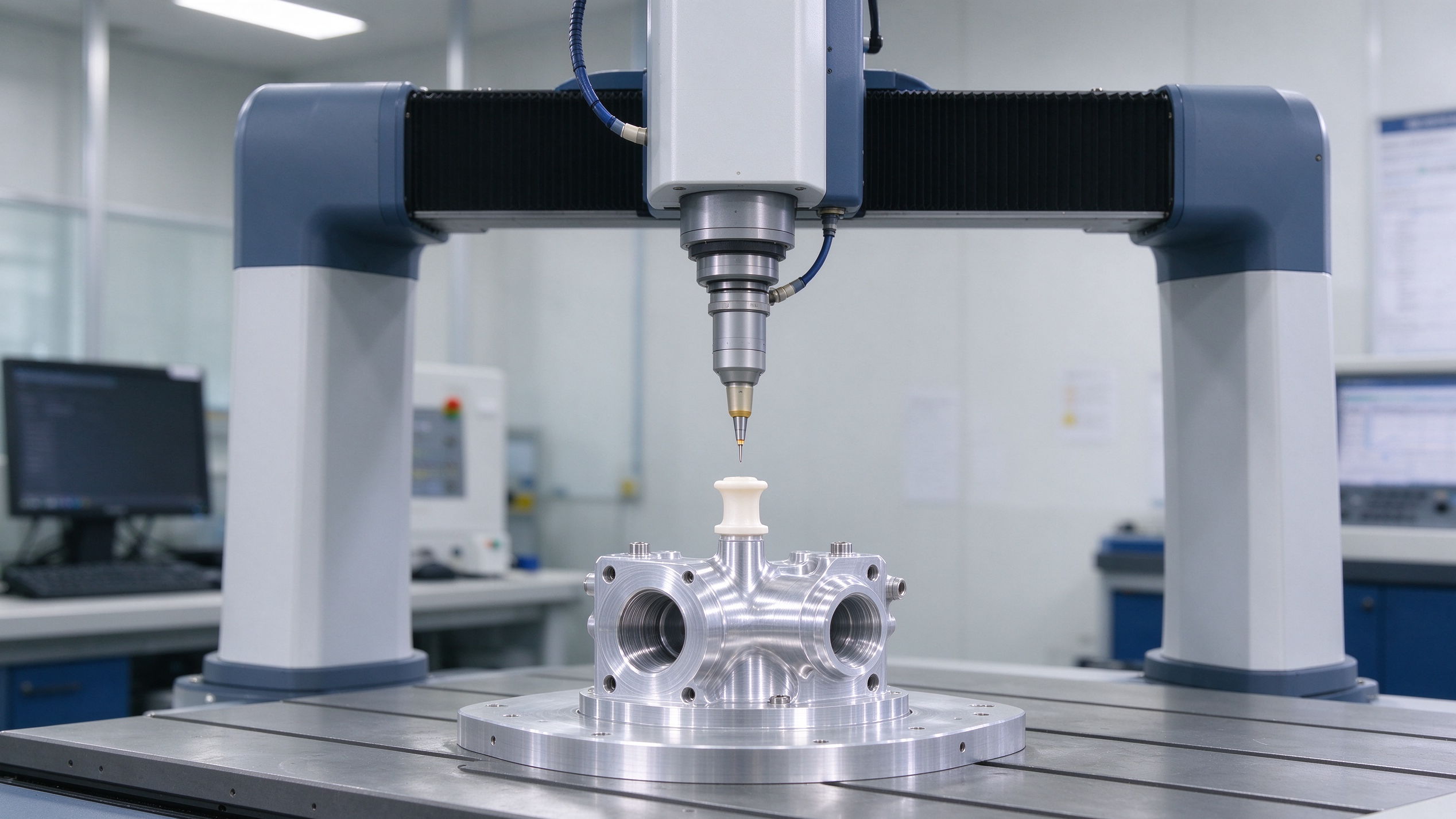
CMM (Coordinate Measuring Machine) inspection verifies all critical dimensions. Full documentation includes inspection reports, material certificates, and traceability records.
This process is vastly different from general industrial machining, where traceability and cleanroom standards are rarely required.
Main Types of Components Made by Medical CNC Machining
Medical CNC machining produces a wide range of components across the healthcare industry. The most common categories include:
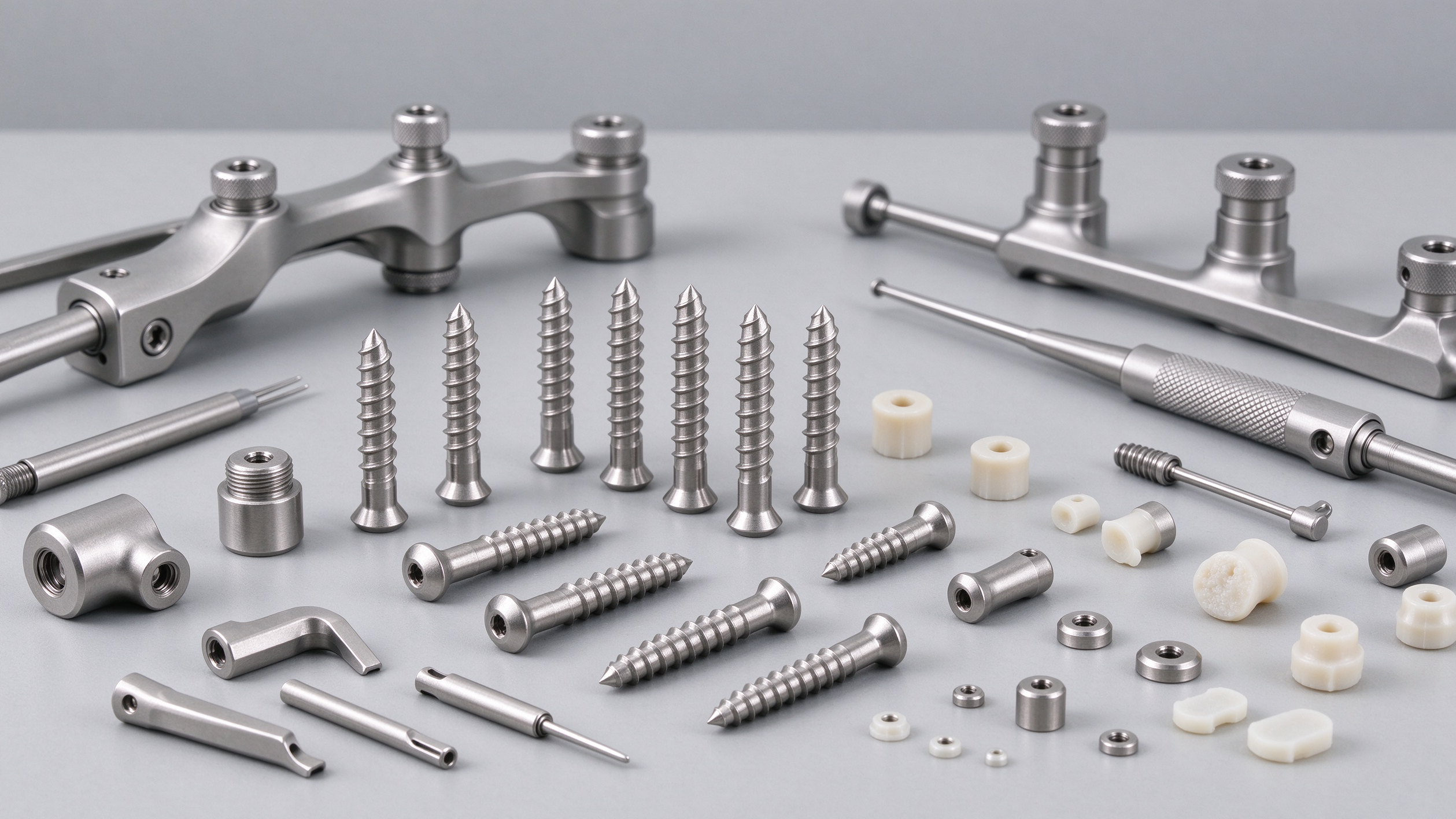
Surgical Instruments
Scalpel handles, forceps, clamps, needle holders
Materials: 316L stainless steel, titanium
Requirements: High precision edge geometry, burr-free surfaces
Orthopedic Implants
Hip and knee joint components, bone plates, screws
Materials: Ti6Al4V titanium alloy, cobalt-chromium
Requirements: Biocompatibility, bone-ingrowth surfaces, tight tolerances
Dental Components
Implant abutments, crowns, bridges, orthodontic brackets
Materials: Titanium, zirconia (via milling), PEEK
Requirements: Custom fit per patient, excellent surface finish
Medical Device Housings and Components
MRI machine parts, ultrasound device components, monitor enclosures
Materials: Aluminum 6061, stainless steel, engineering plastics
Requirements: EMI shielding, dimensional stability
Minimally Invasive Surgery Parts
Catheter components, endoscopic instrument parts, trocars
Materials: Stainless steel, titanium
Requirements: Ultra-precision, thin walls, smooth surfaces
Best Medical Grade Materials Used in Medical CNC Machining
Material selection is one of the most critical decisions in medical CNC machining. The material must be biocompatible, sterilizable, and suitable for the intended application. Here are the top 5 materials:
1. Ti6Al4V Titanium Alloy
Properties: High strength-to-weight ratio, excellent corrosion resistance, biocompatible
Applications: Orthopedic implants, surgical instruments, dental implants
Machining notes: Requires sharp tools, coolant, and careful workholding to avoid vibration
2. 316L Stainless Steel
Properties: Excellent corrosion resistance, easy to passivate, cost-effective
Applications: Surgical instruments, medical device components, implants (temporary)
Machining notes: Work hardens quickly; use sharp tools and moderate feeds
3. PEEK (Polyether Ether Ketone)
Properties: Radiolucent, lightweight, excellent chemical resistance, biocompatible
Applications: Spinal implants, dental abutments, surgical instrumentation handles
Machining notes: Machines like aluminum but requires sharp tools to avoid melting
4. Aluminum 6061 / 7075 (Medical Grade)
Properties: Lightweight, good machinability, anodizable
Applications: Device housings, fixtures, equipment components (not implants)
Machining notes: Easy to machine; attention to surface finish for anodizing
5. Cobalt-Chromium (CoCr)
Properties: Extreme wear resistance, high strength, biocompatible
Applications: Dental crowns, hip/knee implants
Machining notes: Hard on tools; requires carbide or diamond tooling
Understanding material properties is essential for both design engineers and procurement teams. The right material choice directly impacts part performance, cost, and regulatory compliance.
Standard Precision & Tolerance Requirements for Medical Machining
Medical CNC machining operates at significantly tighter tolerances than general industrial work. While typical industrial parts might hold ±0.05mm, medical components often require ±0.01mm or even ±0.005mm (5 microns).
Common tolerance categories for medical parts:
Implant components: ±0.01–0.02mm for fit with bone
Surgical instruments: ±0.005–0.01mm for precision cutting edges
Device housings: ±0.05–0.1mm (more forgiving)
Quality control methods include:
CMM (Coordinate Measuring Machine) inspection for critical dimensions
Surface profilometry for roughness measurements
First Article Inspection (FAI) reports
Statistical Process Control (SPC) for production runs
Compliance: ISO 13485 and FDA RequirementsIndustry Compliance Standards for Medical CNC Machining (ISO 13485 & FDA)
Medical CNC machining is a heavily regulated industry. Any company producing parts for medical devices must comply with both quality management system standards and regulatory requirements.
ISO 13485:2016 This is the global quality management standard for medical devices. Key requirements for machining companies include:
Documented manufacturing processes
Full traceability of materials and production batches
Risk management procedures
Corrective and preventive action (CAPA) systems
FDA 21 CFR Part 820 For companies selling into the US market, FDA Quality System Regulation (QSR) compliance is mandatory. This covers:
Design controls
Purchasing controls (verifying supplier qualifications)
Identification and traceability
Production and process controls
Why does this matter for buyers?
Working with a non-compliant machine shop can delay your product launch, cause audit failures, or even lead to product recalls. Always verify your supplier's certifications before committing to production.
Latest Industry Trends of Medical CNC Machining in 2026
The medical CNC machining industry is evolving rapidly. Here are the top trends shaping 2026:
1.5-Axis Machining for Complex Implants
As patient-specific implants become more common, 5-axis CNC machining enables single-setup production of complex geometries that previously required multiple operations.
2.Miniaturization
Minimally invasive surgery demands smaller, more precise components. Swiss-type CNC machines and micro-milling are growing rapidly.
3.Automation and Lights-Out Manufacturing
Medical device companies are investing in automated CNC cells to reduce costs and improve consistency for high-volume production.
4.Digital Twin IntegrationCAD/CAM/inspection data is being integrated into digital twin platforms, enabling real-time process optimization and predictive quality control.
5.New Materials PEEK composites, shape-memory alloys, and biodegradable materials are expanding the range of medical CNC applications.
Frequently Asked Questions About Medical CNC Machining
How much does medical CNC machining cost?
Medical CNC machining typically costs 2-5x more than general industrial machining, due to tighter tolerances, certified materials, cleanroom requirements, and full documentation. For prototype parts, expect $50-$500 per piece depending on complexity. Production parts range from $5-$200 each at volume.
What is the typical lead time for medical CNC machined parts?
Prototypes: 1-2 weeks. Low-volume production (10-100 pcs): 2-4 weeks. High-volume production: 4-8 weeks depending on part complexity and material availability.
Can medical CNC machined parts be used for implants?
Yes, but only with implant-grade materials (Ti6Al4V, CoCr, PEEK implant grade) and full ISO 13485 compliance. Not all medical machine shops are qualified for implant work — ask specifically about implant experience.
What's the minimum order quantity for medical CNC machining?
Most shops accept 1-piece prototype orders, but pricing improves significantly at 10+ pieces. For production runs, typical MOQ is 50-100 pieces depending on part size.
Do you provide material certificates and inspection reports?
Yes, every medical-grade order should include mill test reports (MTR), dimensional inspection reports, and full traceability documentation. If a supplier doesn't provide these, that's a major red flag.
Ready to start your medical CNC machining project?
At Konsdun, we specialize in precision medical CNC machining with full ISO 13485 compliance — from prototype to production. Send us your 3D drawings today for a free DFM (Design for Manufacturing) review and a detailed quote within 24 hours.






 Phone
Comment
(0)