Why Choosing a Professional Medical CNC machining Service Provider Matters
Selecting a medical CNC machining service provider is one of the most important decisions you'll make as a medical device company. The wrong partner can cause product launch delays, quality failures, regulatory headaches, and even product recalls. The right partner becomes a long-term extension of your engineering team — improving designs, solving problems, and scaling with your business.
If you're new to Medical Device Manufacturing, start with our complete guide to medical CNC machining to understand the basics, then come back here for the Supplier Selection process. If you've read our precision medical machining article, you already know what capabilities to look for — this guide shows you how to evaluate them in practice.
This article walks through the 8 critical criteria to evaluate when choosing a medical CNC machining service provider, plus a practical RFQ template and red flags to watch for.
Verify Medical Machining Certification & Regulatory Compliance Qualifications
This is the first filter — no certifications means no shortlist.
Must-Have Certifications:
ISO 13485:2016 — The medical device quality management standard. This is non-negotiable for any medical CNC machining service provider you consider.
ISO 9001 — Basic quality management (less important, but expected as a baseline)
Nice-to-Have:
FDA Registration — If the shop supplies directly to US medical device companies
CE marking capability — For European market products
AS9100 — Aerospace certification is a good indicator of quality discipline (many shops serve both aerospace and medical)
Questions to Ask:
Can you provide a copy of your current ISO 13485 certificate?
When was your last surveillance audit? Were there any major non-conformances?
Do you have a documented procedure for medical device traceability?
How do you handle customer complaints and CAPA?
Red Flag: A machine shop that claims "we make medical parts" but doesn't have ISO 13485. They might be machining parts that eventually go into medical devices, but they're not set up for the documentation and process control that medical requires.
Evaluate Medical CNC Manufacturer Precision Capabilities & Equipment
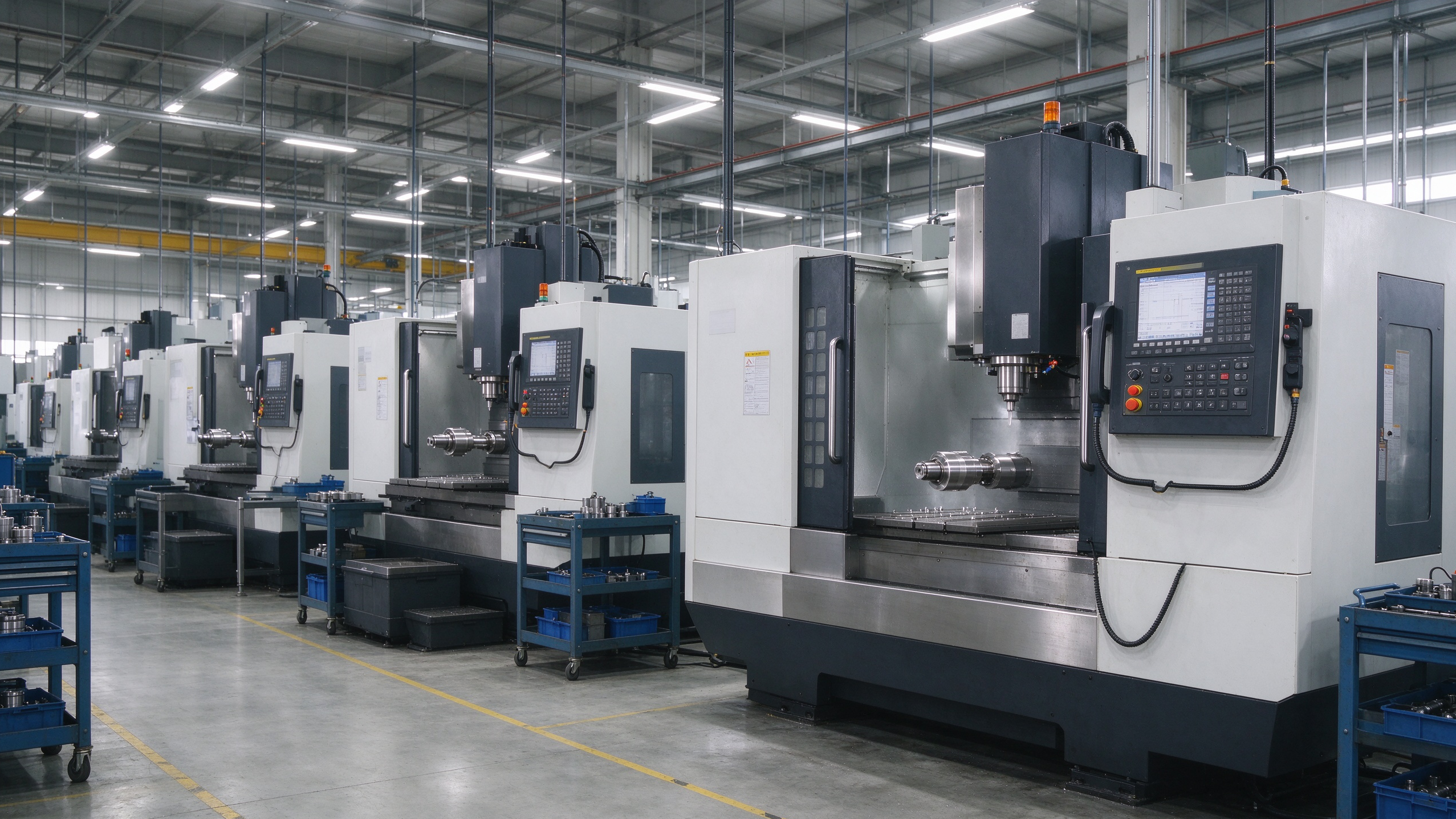
Not every machine shop can hold medical-grade tolerances. You need to match their equipment capabilities to your part requirements.
Key Equipment Questions:
What CNC machines do you have? (3-axis, 4-axis, 5-axis, Swiss-type?)
What's your typical capability? What's your best capability?
Do you have in-house CMM inspection? What brand/accuracy?
Do you have a temperature-controlled machining environment?
Red Flag 1: A shop that claims ±0.005mm capability but doesn't have temperature control. They might hit that number on a good day, but they can't hold it consistently across production runs.
Red Flag 2: They outsource CMM inspection to a third party. This slows down your iterations and makes traceability harder.
Matching Equipment to Your Part:
If you need 5-axis machining for complex implant geometries → verify they have actual 5-axis experience, not just a brochure
If you need small precision parts (Swiss-type work) → ask about their screw machine department specifically
If you need high-volume production → ask about capacity, automated cells, and lead times
Practical Test: Send them a sample part drawing with your tightest tolerances and ask for a DFM (Design for Manufacturing) review. The quality of their feedback tells you more than any equipment list.
Audit Medical Grade Material Experience & Stable Supply Chain
Medical CNC machining involves specific materials with strict certification requirements. Not every machine shop has experience with the full range of medical-grade materials.
What to Ask:
Which Medical Materials do you regularly machine? (Titanium, 316L stainless, PEEK, CoCr, etc.)
Where do you source medical-grade materials? Do you have approved suppliers?
Can you provide mill test reports (MTR) with every material batch?
Do you have experience with material traceability from bar stock to finished part?
Red Flag: A shop that says "we can machine anything" — they probably haven't specialized in medical materials. Titanium, PEEK, and cobalt-chrome each have unique machining challenges. A shop that only machines aluminum and mild steel will struggle with medical-grade materials.
Supply Chain Considerations:
Do they keep common medical materials in stock? (Reduces lead times)
Can they handle custom material specifications?
How do they handle material certification documentation?
For reference, our medical CNC machining guide covers the most common medical materials and their properties — use that as a checklist when evaluating supplier experience.
Check Medical Machine Shop Quality System & Inspection Process
Certifications are a starting point, but you need to understand how quality works in practice on the shop floor.
Questions to Ask:
What's your inspection process for first articles?
Do you use Statistical Process Control (SPC) for critical dimensions?
How do you handle non-conforming parts? (Reject, rework, MRB process?)
What documentation do you provide with shipments? (Inspection reports, material certs, etc.)
Do you have a cleanroom or controlled environment for final cleaning and packaging?
Red Flag 1: "We inspect everything before it ships." — That's fine, but what do they inspect? Do they use CMMs, or just calipers and micrometers? For precision medical parts, you need actual metrology equipment.
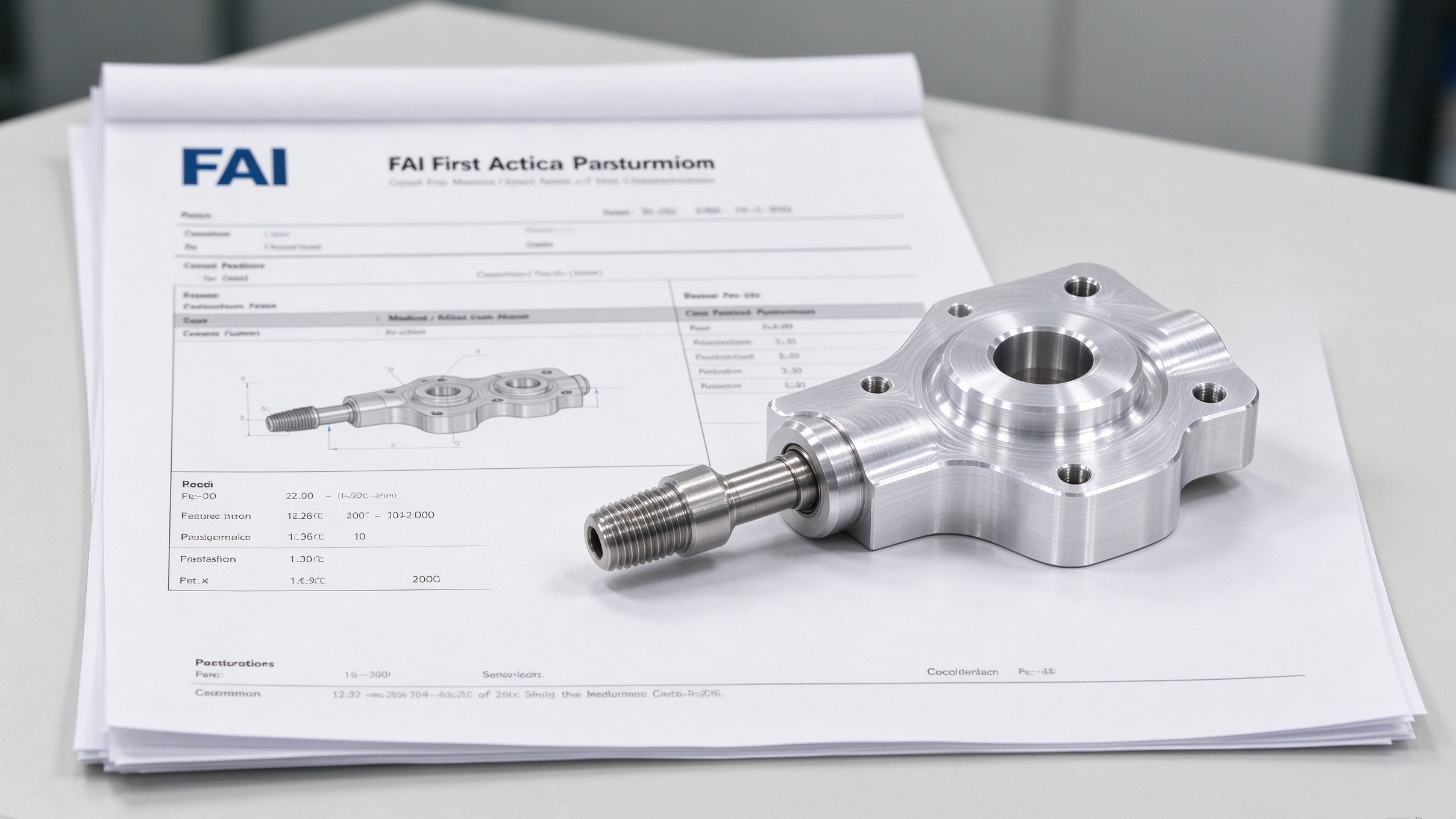
Red Flag 2: They can't provide a sample inspection report. Ask to see a redacted sample from a similar medical program. If they hesitate, they probably don't have robust inspection processes.
What Good Looks Like:
First Article Inspection (FAI) reports with actual measured values
Incoming material inspection
In-process inspection at key stages
Final inspection with CMM for critical features
Full documentation package with every shipment
Confirm Medical Device Machining Industry Experience & Client References
There's no substitute for actual medical device experience. A shop that's been machining medical parts for 10 years will handle your problems faster and better than a shop that's "trying to get into medical."
Questions to Ask:
How long have you been serving the medical device industry?
Can you share examples of medical parts you've machined? (Redacted, of course)
Do you have experience with our type of product? (Implant, surgical instrument, device component?)
Can you provide references from medical device clients?
Red Flag: They can't name any medical device clients or provide references. Every shop has to start somewhere, but if they're charging medical-level prices, they should have medical-level experience.
Good Sign: They understand your industry terminology. They know what Ra means, what ISO 13485 requires, what traceability involves. If you have to explain medical basics to them, they're learning on your dime.
Assess Production Capacity, Lead Time & Scalability of CNC Services
Your machining partner needs to grow with you. A shop that's perfect for prototype runs might struggle when you scale to production.
Questions to Ask:
What are typical lead times for prototype / low-volume / production orders?
How many CNC machines do you have? What's your capacity?
Can you scale from 10 prototypes to 10,000 production parts?
What's your process for ramping up production?
Do you have backup plans for machine downtime?
Red Flag: They're a 5-person shop trying to handle your high-volume production. They'll be great for prototypes, but when you need 5000 parts a month, they won't have the capacity.
Good Sign: They have a clear process for transitioning from prototype to production. They understand that medical device companies go through FDA validation, which means production processes can't change randomly after validation.
Practical Advice:
Start with a small prototype order to test their quality and communication
Don't commit all your volume to one shop initially (dual sourcing is smart for medical)
Ask about their scheduling flexibility — urgent prototype runs are common in medical device development
Analyze Engineering Support & Professional Communication Capability
Great machine shops don't just take your drawings and send back parts. They act as engineering partners — suggesting design improvements, flagging potential issues, and helping you save cost without sacrificing quality.
What to Look For:
Do they provide DFM (Design for Manufacturing) feedback on your drawings?
Do they respond to emails and questions quickly?
Do they have dedicated engineers for medical accounts?
Will they proactively flag potential problems before they become expensive issues?
Red Flag: They just say "yes, we can make that" to every drawing without any feedback. This means either they're not thinking about it, or they'll find problems after you've already paid for setup.
Good Sign: They push back on your design when something doesn't make sense from a manufacturing perspective. They say "this wall thickness will cause tool deflection, we recommend..." — that's the kind of partner you want.
Calculate Total Cost of Ownership for Medical CNC machining services
The cheapest quote is rarely the best value in medical CNC machining. Quality problems, delays, and compliance issues cost far more than the per-part price difference.
How to Evaluate Pricing:
Get at least 3 quotes for comparison
Don't automatically pick the cheapest
Ask what's included in the price: inspection reports? material certs? packaging? shipping?
Understand tooling and setup charges (these are amortized over volume)
Red Flag 1: Their quote is 30-50% below everyone else. In medical machining, you get what you pay for. A suspiciously low quote usually corners-cutting somewhere — material, inspection, documentation, or quality.
Red Flag 2: No detailed breakdown. They just give you a number. You need to understand what you're paying for.
Total Cost of Ownership (TCO) Calculation: When comparing suppliers, calculate:
Unit price × volume
Tooling/setup costs
Shipping and logistics
Quality risk (what's the cost of a failed batch?)
Delay risk (what's the cost of missing your launch date?)
Documentation and compliance costs
Red Flags to Avoid When Selecting Medical CNC Machining Manufacturers
Even if a shop checks most boxes, some red flags mean you should walk away:
No ISO 13485 and no plan to get it — They're not serious about medical
Can't provide sample inspection reports — Their quality process is questionable
Push back on material traceability requirements — They don't understand medical compliance
Unrealistically low pricing — They'll cut corners somewhere
Poor communication during the quoting process — It only gets worse after you're a customer
No medical device references — They're learning on your project
They rush you to commit — Legitimate shops don't pressure you
Frequently Asked Questions About Medical CNC Machining Services
Q1: How do I request a quote from a medical CNC machining company?
A: Send your 3D CAD files (STEP/IGES preferred), 2D drawings with critical dimensions and tolerance specs, material requirements, estimated annual volume, and target timeline. A good supplier should respond within 1-2 business days with questions or a quote.
Q2: What information should I include in an RFQ for medical CNC parts?
A: Must include: part drawings (3D + 2D), material specification (with grade, e.g., Ti6Al4V Grade 5), tolerance requirements, surface finish specs, quantity (prototype + production), target price range, and certification requirements (ISO 13485, FDA, etc.).
Q3: How long does it take to qualify a new medical machining supplier?
A: Plan for 2-6 months. This includes: initial RFQ review, facility audit (if required), first article inspection, process validation (if needed for FDA), and pilot production. Rushing this process risks quality issues later.
Q4: Should I use one supplier or multiple for medical CNC parts?
A: For critical medical device components, dual sourcing is recommended. Having two qualified suppliers reduces supply chain risk. However, both suppliers must be fully qualified, and you need to manage process consistency between them.
Q5: What if my medical CNC supplier is not ISO 13485 certified?
A: They can still machine parts for your components, but you (the medical device company) remain responsible for regulatory compliance. This means you need to do your own supplier audits, incoming inspection, and quality control. It's much easier to work with an ISO 13485 certified shop.
Conclusion: Get Trusted Medical Device Machining Solutions
Tired of chasing machine shops that don't understand medical requirements? We've been the trusted medical CNC machining partner for 50+ medical device companies across the US, Europe, and Asia. ISO 13485 certified, FDA registered, and ready to support your project from prototype to full production.






 Phone
Comment
(0)