


Traditional Turning
Traditional turning is one of the oldest and most respected manufacturing methods used to shape round components from raw material. It is a machining process in which a cutting tool removes material from a rotating workpiece, gradually forming it into the desired size and shape. Although modern production has introduced many advanced technologies, traditional turning remains an important technique because of its reliability, flexibility, and precision.In a traditional turning operation, the workpiece is held firmly in a lathe and rotated at a controlled speed. A skilled operator then feeds a single-point cutting tool against the surface of the material. By carefully adjusting the tool position, the machinist can produce cylindrical surfaces, tapers, grooves, threads, shoulders, and other detailed features. The process requires attention to speed, feed rate, cutting depth, and tool condition in order to achieve the best results.One of the main strengths of traditional turning is its versatility. It can be used on many materials, including steel, aluminum, brass, copper, and various plastics. This makes it suitable for a wide range of industries and applications, from simple repair work to the production of precision mechanical parts. Traditional turning is also useful for small-batch manufacturing and prototype development, where flexibility is often more important than mass production speed.The quality of a turned part depends greatly on the operator’s skill and the condition of the machine. A well-maintained lathe allows smoother cutting, better surface finish, and more accurate dimensions. Experienced machinists can create highly precise components by selecting the correct cutting tools and controlling the cutting process carefully. Even though the method is called “traditional,” it still demands technical knowledge, patience, and craftsmanship.Traditional turning is also valued for its educational role. It helps learners understand basic machining principles such as cutting geometry, workholding, measurement, and tool selection. Because it provides direct feedback, it is an excellent way to develop practical metalworking skills. Many machine shops continue to rely on traditional turning for custom parts, maintenance tasks, and urgent repairs.Another important advantage is that traditional turning can produce parts with excellent concentricity and symmetry. This is especially important for shafts, bushings, rollers, collars, and other components that must rotate smoothly and fit precisely with other parts. The process can also be combined with drilling, boring, threading, and parting-off operations, making it a complete solution for many machining needs.In conclusion, traditional turning remains a fundamental machining process that combines simplicity, accuracy, and craftsmanship. While technology continues to evolve, this classic method is still widely appreciated for its practicality and ability to produce dependable, high-quality parts.
Products
Category:
-
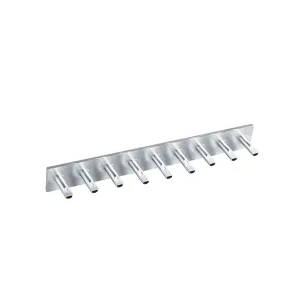
Integrated Multi-Pin Aluminum Header Base
Category: CNC Metal PartsBrowse number: 239Number:Release time: 2026-06-16 17:04:01Compared with conventional fabricated connector housings or standard mounting structures, CNC machined integrated aluminum header bases provide higher dimensional precision, improved assembly consistency, and better structural stability. Precision CNC machining allows accurate control of pin hole positioning, mounting interfaces, structural cavities, connector slots, and assembly dimensions, helping improve connector alignment accuracy and installation efficiency.
News
Category:
-
[industry news]Swiss-Type CNC Machining vs Traditional Turning: What's the...
2026-06-10 09:30:24
Case
Category:

Video
Category:
No search results found!
Download
Category:
No search results found!
Job
Category:
No search results found!
Featured Products
-
NEWS
Integrated Multi-Pin Aluminum Header Base
Learn more




 Phone
Phone