


High Precision Machining
High precision machining refers to the advanced manufacturing process used to produce parts and components with extremely tight tolerances, excellent surface finish, and consistent dimensional accuracy. It is widely applied in industries where even the smallest deviation can affect performance, reliability, or safety. Typical applications include aerospace, medical devices, automotive systems, semiconductors, electronics, optics, and industrial equipment.The core objective of high precision machining is to remove material from a workpiece with exceptional control. This is achieved through carefully engineered processes such as CNC milling, CNC turning, grinding, drilling, EDM, and multi-axis machining. Modern equipment is capable of producing complex geometries and maintaining tolerances measured in microns. In many cases, advanced software, automated tool compensation, and real-time inspection systems are used to ensure repeatability and accuracy across large production runs.A key feature of high precision machining is the use of high-quality materials and specialized tooling. Depending on the application, machinists may work with stainless steel, aluminum, titanium, copper, brass, engineering plastics, or exotic alloys. Each material requires specific cutting parameters, coolant strategies, and tool selections to achieve the desired result without distortion, chatter, or excessive wear. Skilled process planning is essential to optimize cutting speed, feed rate, spindle speed, and depth of cut.Quality control plays a central role in precision machining. Parts are often inspected using coordinate measuring machines, optical measurement systems, micrometers, gauges, and surface roughness testers. These tools verify that every dimension meets strict specifications. In high-end manufacturing, inspection is not limited to final checks; it is often integrated throughout production to detect errors early and reduce waste.Another important advantage of high precision machining is its ability to support custom and low-volume production. Many industries need specialized components that are not available through standard manufacturing methods. Precision machining allows these parts to be produced efficiently while meeting exact design requirements. It also supports rapid prototyping, helping engineers test and refine products before full-scale production.In today’s competitive market, high precision machining is valued for its combination of accuracy, efficiency, and versatility. As product designs become more complex and performance expectations continue to rise, the demand for highly precise manufacturing solutions keeps growing. This process remains a foundation of modern industry, enabling the production of reliable components that meet the most demanding technical standards.
Products
Category:
-
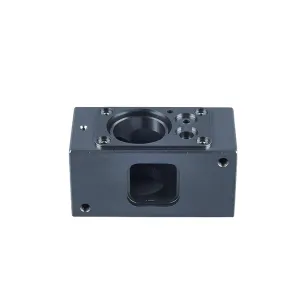
Precision Stainless Steel CNC Machined Parts
Category: CNC Metal PartsBrowse number: 260Number:Release time: 2026-05-28 10:22:08Stainless steel is widely used in precision manufacturing because of its excellent corrosion resistance, mechanical strength, wear resistance, and long service life. Compared with standard metal materials, stainless steel provides better durability and structural stability under complex operating environments, making it suitable for components exposed to humidity, chemicals, high temperatures, or continuous mechanical stress.
News
Category:
No search results found!
Case
Category:
No search results found!
Video
Category:
No search results found!
Download
Category:
No search results found!
Job
Category:
No search results found!
Featured Products
-
NEWS
Precision Stainless Steel CNC Machined Parts
Learn more




 Phone
Phone