


CNC Aluminum Instrument Equipment Housing
Certainly — here is a 500-word English description for a CNC Aluminum Instrument Equipment Housing, with no company name included:---CNC Aluminum Instrument Equipment HousingThe CNC aluminum instrument equipment housing is a precision-engineered enclosure designed to protect sensitive electronic, optical, or mechanical components used in advanced instruments and devices. Manufactured through high-accuracy CNC machining, this type of housing offers excellent dimensional consistency, structural strength, and a refined surface finish, making it ideal for demanding industrial, laboratory, medical, and automation applications.Made from high-quality aluminum alloy, the housing combines lightweight properties with strong mechanical performance. Aluminum is widely chosen for instrument enclosures because it provides outstanding corrosion resistance, efficient heat dissipation, and reliable durability. These characteristics are especially important for equipment that must operate in stable conditions over long periods of time. The housing can be customized in a variety of shapes, sizes, and internal configurations to meet the specific requirements of different instruments.CNC machining allows for tight tolerances and complex geometries, ensuring that every mounting point, slot, opening, and internal cavity is accurately produced. This precision is essential for instrument equipment, where even small deviations can affect performance, alignment, or assembly. Features such as connector openings, ventilation holes, threaded inserts, display windows, and cable interfaces can all be integrated into the housing with high repeatability.In addition to functional performance, the appearance of the CNC aluminum housing is also highly refined. Surface treatments such as anodizing, sandblasting, polishing, or brushing can be applied to improve wear resistance, enhance corrosion protection, and create a professional visual finish. Anodized surfaces also allow for different color options, making it possible to match the housing to product branding or equipment classification needs.The housing provides effective protection against dust, impact, and external interference, helping to safeguard the internal components from environmental damage. For instruments used in precision measurement, testing, control, or monitoring, a well-designed aluminum enclosure contributes to stable operation and longer service life. It also helps improve heat management by dissipating internal temperature buildup, which is particularly important for electronic devices and compact systems.Another advantage of CNC aluminum instrument housings is their flexibility in design and production. Prototype development, small-batch manufacturing, and large-scale production can all be supported with consistent quality. This makes the housing suitable for both custom engineering projects and standard equipment applications. Designers can easily incorporate branding elements, engraved markings, or functional labels to improve usability and identification.Overall, the CNC aluminum instrument equipment housing is a reliable, durable, and highly customizable solution for protecting precision equipment. Its combination of machinability, strength, lightweight construction, and attractive finish makes it an excellent choice for modern industrial and technical products. Whether used in analytical instruments, testing devices, control systems, or specialized electronic equipment, this housing delivers both performance and appearance at a high standard.---If you want, I can also make it:1. more technical2. more marketing-style3. more suitable for product page/Alibaba listing
Products
Category:
-
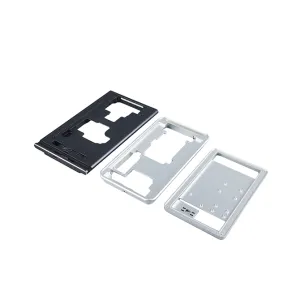
CNC Aluminum Instrument Equipment Housing
Category: CNC Metal PartsBrowse number: 237Number:Release time: 2026-06-16 09:34:52Compared with traditional sheet metal housings or plastic enclosures, CNC machined aluminum instrument housings provide higher structural precision, better rigidity, and improved assembly consistency. Precision CNC machining allows accurate control of installation openings, panel interfaces, internal cavities, and structural alignment, helping improve equipment integration and long-term operational reliability.
News
Category:
No search results found!
Case
Category:
No search results found!
Video
Category:
No search results found!
Download
Category:
No search results found!
Job
Category:
No search results found!
Featured Products
No search results found!




 Phone
Phone