Product Introduction
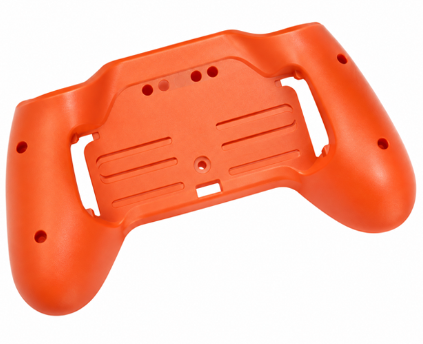
This game controller housing prototype is a custom plastic enclosure designed for gaming devices and consumer electronic products. The shell structure is developed to accommodate internal electronic components such as circuit boards, buttons, switches, and control modules.
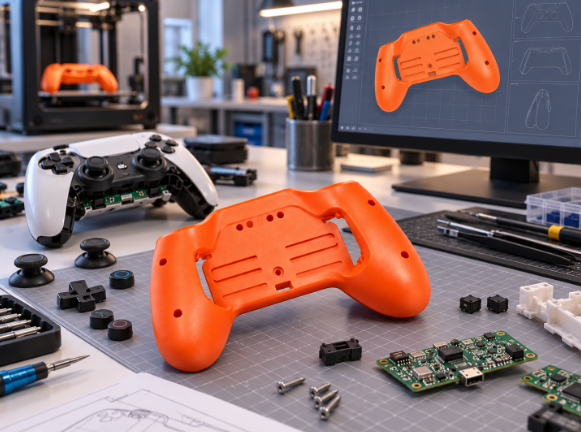
During the product development stage, manufacturers often need physical prototypes to evaluate appearance, assembly structure, hand feeling, and user experience. 3D printing and vacuum casting provide flexible solutions for producing small-batch prototype housings without the high cost and long lead time of injection molding tools.
The curved surface design, lightweight structure, and internal mounting features make this type of housing suitable for gaming controllers, handheld devices, electronic accessories, and other plastic consumer products.
KONSTUN Precision Technology supports rapid prototyping and low-volume plastic part production through 3D printing, vacuum casting, and injection molding processes.
Key Specifications & Parameters
Product Type:
3D printed game controller housing prototype
Product Form:
Gaming controller shell, electronic device enclosure, plastic prototype housing
Material Options:
PU resin, ABS-like resin, nylon, ABS, PC, and other engineering plastics
Processing Methods:
3D printing, vacuum casting, surface finishing, painting, polishing, and injection molding
Surface Treatment Options:
Sanding, spray painting, matte finish, glossy finish, UV coating, texture treatment
Structure Features:
Curved ergonomic shell design, internal assembly space, screw mounting points, button openings, electronic component housing area
Application Fields:
Gaming devices, consumer electronics, handheld equipment, electronic accessories, smart hardware products
Prototype Support:
3D CAD files, STEP, STP, STL, drawings, or physical samples
Product Features & Functions
Fast Product Development Validation
The prototype housing allows designers to quickly evaluate product appearance, structure, size, and user experience before mass production.
Complex Plastic Structure Production
3D printing can produce curved surfaces, ergonomic designs, and detailed structures without requiring expensive tooling.
Suitable for Small Batch Production
Vacuum casting provides a practical solution for low-volume production and functional prototype testing before injection molding.
Realistic Surface Appearance
Surface Finishing processes such as painting and polishing help prototypes achieve a look close to final consumer products.
Electronic Component Integration Testing
The housing can be used to test PCB installation, button positions, internal layout, and assembly compatibility.
Flexible Manufacturing Options
The product can move from prototype production to injection molding based on project requirements and production volume.
Specific Application Scenarios
Gaming Controller Development
Used by gaming hardware companies to verify controller shape, grip comfort, button layout, and internal structure before production.
Consumer Electronics Prototypes
Suitable for electronic product developers creating handheld devices, smart accessories, and portable equipment.
Industrial Design Verification
Helps designers evaluate product appearance, ergonomics, and assembly structure during early development stages.
Small Batch Electronic Products
Vacuum casting can provide multiple prototype units for testing, demonstrations, and market evaluation.
Engineering Testing Projects
Used for checking component fitting, PCB installation, and mechanical structure before final manufacturing.
New Product Launch Preparation
Supports product teams in reducing development risks before investing in injection molding tools.
FAQ
Q1: What is this game controller housing prototype used for?
A1: It is used for gaming device development, appearance verification, structural testing, and electronic component assembly evaluation.
Q2: Why use 3D printing for this type of housing?
A2: 3D printing allows fast production of complex plastic shapes without expensive molds, making it suitable for prototype development.
Q3: Can this prototype be used for functional testing?
A3: Yes. The housing can be used to test assembly structure, button positions, PCB installation, and product ergonomics.
Q4: What materials can be used for prototype plastic housings?
A4: Common materials include PU resin, ABS-like materials, nylon, ABS, and other engineering plastics.
Q5: When should vacuum casting be selected?
A5: Vacuum casting is suitable when multiple prototype units or small-batch production parts with better surface quality are required.
Q6: Can this product be developed into mass production parts?
A6: Yes. After prototype verification, the design can be transferred to injection molding for larger production quantities.






 Phone